SUFCdb
Southend United Football Club database
A 5 minute guide to Southend United FC
A: Yes, that's the team I support and it's pronounced Sarfend United
A: Neither, the town is to the south end of the village of Prittlewell (which having a priory was the biggest place in the area 200 odd years ago when Southend was named).… more
Roman leader Julius Caesar spent in England, leading his Roman Legions, and making alliances with kings such as the King of the Trinovantes, a tribe that is known to have lived in Essex, and the Romans are known to have landed there.
Next to a little river known as Prittle Brook, a Roman villa or farmhouse was built, and slowly the village of Prittlewell became established. A thousand years later and the Doomsday, or Domesday survey was made, and St Mary’s Church Prittlewell is mentioned in the book. At the south end of the village, a new town was being established and soon the Church of St Mary The Virgin, became the mother church of Southend. Today, few have heard of Prittlewell, but the town which grew from its south end has become famous among north Londoners, who flock there for their holidays by the sea eating candy floss on the pier and fish and chips on the front.
Southend swelled, and soon formed a football team, then another, and another. Southend Victoria, Southend Corinthians, Ramblers, Wesleyans and Athletic to name but a few. So, a meeting was called at Prittlewell’s Blue Boar Hotel in May 1906, to form a club that could compete with the bigger boys of football. Prittlewell United was proposed as a name to rival Southend Athletic, but Southend United won the day and the newly elected directors were told to go out and find professional players for the club.
(With thanks to https://whatsbehindthebadge.com/index.php/southend-united/)
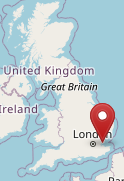
A: On the north of the Thames Estuary, about 40 miles east of London, so we are not actually on the sea.
A: Not really, Southend United were formed following a meeting on 19 May 1906 when it was decided the town needed a professional club, the former top local amateur team, Southend Athletic, contributed a few reserve players, but that was about it.
A: No, Southend Athletic wore red + they wanted to be different.
A: Not in any great numbers although shrimp boats did operate on the Thames until the 1950's using cotton nets to catch the shrimps and boiling them on board over braziers to sell to the day-trippers. Cockles are the local delicacy, so Southend could have been the Cocklers.
A: For some reason until COSU took the helm, Southend's directors favoured this so local directional signs, car stickers and the like referred to 'the Blues', but now the Shrimpers is the most used nickname.
A: Well yes, Southern League Division 2, but bear in mind the Football League was dominated by teams from the Midlands + North, with only Bristol City, Chelsea and Clapton Orient from the south.
A: 1920 when the league formed a third division from all the Southern League clubs. In 1921 this became the Third Division South when the Northern League clubs also joined the Football League.
A: We have moved forward many years now, but to summarise in May 1958 they finished seventh in Division 3 South. The league took the top 12 teams from Division 3 South and the top 12 from Division 3 North and put them in a new national Division 3. The rest went into a new Division 4+ so Southend automatically started the next season in Division 3 proper. They were relegated to Division 4 in 1996 + were promoted for the first time ever in May 1972, runners up to Grimsby Town.
A: Two championships. In 1981 they won the 4th division title under the management of Dave Smith and in 2006 they won League 1 under Steve Tilson. 8 players in the 1981 squad made more than 40 appearances and 5 players in the 2006 team. Then on 20th May 2026 at Wembley they won the FA Vase 4-2 on penalties after playing out a 0-0 draw vs Wealdstone.
A: It's true, 3rd in Division 4 in 1989, 2nd in Division 3 in 1990, 12th in Division 2 in 1991 then founder members of Division 1 (when the Premier League was formed).
A: 10-1 on three separate occasions, most recently against Aldershot. There was also 13-0 win against Chesham Generals in South Eastern League Second Division in 1906.
A: 7th November 2006 at Roots Hall, Southend then at the bottom of the Championship took on "the Greatest Football Team in the World" Manchester United who were clear leaders of the Premiership and beat their team of 10 full internationals 1-0 with a stunning Freddy Eastwood free kick. Southend were the only team from the lower divisions to claim a 1st Division scalp in the first year the League Cup second round was played over two legs, beating Bolton 2-1 on aggregate in 1980. A 3-2 win over Tottenham, but lost on away goals + finally a 1-0 victory against Derby (and 1-0 on aggregate). The fans favourites in a 2026 poll were… more
The match voted top by supporters with close to 60% in an Echo poll was the 1-0 win against the star-studded Manchester United side containing Wayne Rooney and Cristiano Ronaldo with Sir Alex Ferguson.
Second in the poll was the League Cup classic in 1989 when Southend beat Tottenham Hotspur 3-2 although they were edged out on the away goals rule.
Third place went to Southend’s exciting play-off final win against Wycombe Wanderers at Wembley in 2015, while the historic 1-0 win at Bury in 1991, which secured promotion to the Second Division, took fourth place among the voting.
Blues’ 1-0 win against Bristol City, which sealed the League One title in 2006, was fifth in poll while sixth was the 1979 0-0 draw with Liverpool in the snow was watched by 31,036 supporters at Roots Hall.
A: Two outstanding - Stanley Victor Collymore, discovered playing in Palace reserves + sold to Forest for about £3m. (different sources still quote different figures) + Ronnie Whelan at the end of his league career. The 90's especially produced a crop of players who went on to appear in the Premiership.
A: Well Sandy Anderson (1950 - 63) made the most league appearances (451), Alan Moody (1972 - 84) made most in total (502) and Roy Hollis scored the most goals 122 between 1953+ 1960, but a 2026 poll suggested … more
Best players were
A: The aforementioned Ronnie Whelan (wonderful player, poor manager), Bobby Moore (great player, dreadful manager), Dave Webb (considered by most to be Southend's most successful manager) and Peter Taylor (former England + Leicester manager, who was told to go on holiday by Southend and they changed all the locks before he came back!!), but again there was a 2026 poll … more
Dave Webb received 44 per cent of the votes in Southend Echo poll to finish ahead of Steve Tilson who finishing second and Dave Smith, third. Kevin Maher took fourth and Paul Sturrock fifth.
A: Dozens and dozens of course as we have played (and normally lost to) quite a few top teams in our time, but two perhaps worthy of a special mention. Tony Adams (ex-Arsenal and England Captain) while he was serving time for a drink-driving offence as Dave Webb took the squad along to the prison for a practice match (Tony remembers Brett Angell gave him a hard time that day). Gabriel Batistuta (Argentine / Serie A superstar, European Player of the Year, etc.) played for Fiorentina against the Shrimpers in the Anglo-Italian Cup in 1993 (we lost 3-0)
A: Our on-field fortunes between 1996 and 2023 represent one of the most volatile journeys in modern English football. Over twenty-seven years, we experienced every conceivable footballing emotion, climbing from the brink of total collapse to the heights of the second tier, before enduring a historic slide out of the Football League altogether. Let's look at that first 14 years… more
The period began in the worst possible fashion. Competing in the First Division (Tier 2) during the 1996–97 season, a collapse in form saw the Blues finish bottom of the league, ending their six-year stay in the second tier. The momentum did not stop there. The 1997–98 campaign in the Second Division (Tier 3) was a total disaster under managers Alvin Martin and Ronnie Whelan. Southend won just six league games all season, finishing rock bottom again and crashing into the basement tier of English football in consecutive years.
For six seasons, Southend became a stagnant fourth-tier side, regularly fighting off further relegation rather than pushing for promotion. Aside from a run to the Football League Trophy Final in 2004 (losing 2–0 to Blackpool at the Millennium Stadium), the club struggled for consistency on the pitch. The turning point arrived in late 2003 with the appointment of former player Steve Tilson as manager. He orchestrated the most explosive and successful period in the club's modern history, built on a clinical strike partnerships of Freddy Eastwood, Wayne Grey and Shaun Goater. After finishing 4th in 2004-05 Southend defeated Lincoln City 2–0 in the Play-Off Final at Cardiff to secure promotion. Then defying all expectations, Southend went toe-to-toe with giants like Nottingham Forest to win the League One title outright, sealing consecutive promotions to return to the Championship.
Though the club was ultimately relegated from the second tier, the season provided their greatest modern result: a 1–0 victory over Sir Alex Ferguson’s Manchester United in the League Cup on 7 November 2006, courtesy of a spectacular Eastwood free-kick. Following relegation from the Championship, the Blues spent three years stabilising in League One before off-field financial issues caught up with them, resulting in relegation back to League Two in 2010 and Steve Tilson departure.
A: The 2010s, then, were a decade that encapsulated everything about Southend United under Ron Martin's stewardship: genuine moments of excitement and achievement, a fanbase of extraordinary loyalty and passion, and an off-field backdrop of financial instability that always threatened to overwhelm whatever was being built on the pitch. The Wembley play-off victory in 2015 and the near miss of 2017 deserved to be remembered as high points. Instead, they came to feel like the last flourish before a long, painful unravelling.… more
If the 2010s were a decade of mixed fortunes for Southend United, they at least began with a degree of hard-won clarity. Having suffered relegation from League One in April 2010 — the culmination of a desperate, financially tormented season — the Shrimpers dropped back into League Two for the first time since 2005. Long-serving manager Steve Tilson, who had guided the club to some of its greatest moments in the mid-2000s, departed that summer after seven years in charge, his relationship with chairman Ron Martin having reached breaking point. A new chapter, for better or worse, was about to begin.
Paul Sturrock took over the reins and steadied the ship in his first season, guiding the club to a respectable mid-table finish. In 2012–13, with a transfer embargo hanging over the club at the start of the campaign — a legacy of those familiar difficulties with the tax authorities — Sturrock's side still managed to mount a creditable run in the Football League Trophy, taking a remarkable 33,000 supporters to Wembley for the final. That extraordinary turnout spoke volumes about the loyalty of the Southend fanbase, even if the occasion ended in a 2–0 defeat to Crewe Alexandra. Sturrock was sacked just days before that final, with Phil Brown appointed as his successor.
Brown, a manager with genuine top-flight pedigree from his time at Hull City, proved to be a galvanising presence. In his first full season, 2013–14, Southend reached the League Two play-off semi-finals before losing to Burton Albion. A year later came the real prize: a breathless play-off final against Wycombe Wanderers at Wembley, settled 7–6 on penalties, that earned the club promotion back to League One. It was the kind of dramatic, joyful occasion that supporters had been craving, and Brown's stock at the club had never been higher.
The following two seasons represented something close to the best of what Southend could be in this era. In 2015–16 the side consolidated solidly in League One, and then came the high-water mark of the decade: the 2016–17 campaign, in which Southend pushed all the way for a play-off place, ultimately missing out on a spot in the Championship play-offs by just a single point on the final day. It was a remarkable effort for a club of Southend's means, and a testament to what Brown and his squad had built.
The decline that followed was swift and painful. Results deteriorated through 2017–18 and 2018–19, with Brown placed on gardening leave in January 2018 after a wretched run of form, before eventually departing. The club narrowly avoided relegation in 2018–19 on goal difference alone, a narrow escape that felt ominous rather than cause for relief. By the time former England defender Sol Campbell was handed the manager's job in October 2019 — a headline-grabbing appointment that generated considerable media interest — the club was already in serious difficulty, both on the pitch and off it.
Throughout the decade, the off-field situation at Roots Hall had been a source of constant anxiety. The financial problems never fully went away. By December 2019, wages were again going unpaid and as the new decade dawned, Southend were bottom of League One and essentially powerless to address their problems in the transfer market.
A: We experienced the most tumultuous period in our history between 2019 and 2023, enduring consecutive relegations from the Football League before finally stabilizing in the non-league tiers. Financial crises, transfer embargoes, and fan protests defined a historic collapse that ended over a century of Football League membership. However, the appointment of Kevin Maher eventually brought stability on the pitch amid ongoing struggles off it.… more
The 2019–20 season exposed severe cracks in Southend United’s foundation. The club struggled with ongoing financial issues, leading to multiple winding-up petitions, late wage payments, and a strict transfer embargo that crippled the squad's competitiveness. Martin, it appeared, was relying on advise from Harry Redknapp, and his protege Kevin Bond resigned as Manager early in the campaign. His replacement, Sol Campbell, inherited an unstable situation and did nothing to improve it.The season was abruptly halted in March 2020 due to the COVID-19 pandemic. When clubs voted to curtail the season using an unweighted points-per-game (PPG) system, Southend sat in 22nd place, having won just 4 out of 35 matches. This mathematically confirmed their relegation to League Two.
Instead of mounting a recovery, the Shrimpers spiralled further downward. Redknapp's choice Mark Molesley took over as manager but was constrained by another transfer embargo that lasted for much of the winter. Southend spent almost the entire season pinned to the bottom of the table.In a desperate bid for survival, the club sacked Molesley in April 2021 and brought back former manager Phil Brown. Despite a slight upturn in late-season results, the damage was already done. Southend finished 23rd in League Two with 45 points, suffering a second consecutive relegation. This marked the end of the club's 101-year continuous membership in the Football League.
Southend’s debut season in the fifth tier started disastrously. Phil Brown’s side struggled against non-league opposition, culminating in a heavy home defeat to Chesterfield after which Stan Collymore called into Essex Radio and led Ron Martin to relieved Brown of his duties immediately after.In October 2021, Stan and long standing director Gary Lockett recommended former player Kevin Maher. Alongside his coaching staff of Darren Currie and Mark Bentley, Maher overhauled the squad during the January window. He instilled a resilient defensive structure, leading to a 13-match unbeaten run. The club successfully steered clear of another relegation battle, finishing a stabilizing 13th place with 58 points.
The 2022–23 season showcased the almost unbelievable resilience of Maher’s squad. Off the pitch, the club remained plagued by financial crisis. Another transfer embargo was imposed in September 2022 due to an unpaid HMRC tax debt, meaning Maher could not sign any replacement players for the rest of the campaign. Despite playing with a severely depleted squad and staff frequently working without pay, the team rallied together. Powered by a tight defense and strong performances at Roots Hall, Southend mounted a serious promotion charge. They ultimately finished in 8th place, missing out on the National League play-offs by just two points.
A: The connection between Stan Collymore and Southend United has always been a special one. It was at Roots Hall in the 1992–93 season that the young striker first announced himself to English football, joining in November 1992 and going on to score 15 league goals in 30 appearances, helping retain our spot old First Division. He later said he counted saving Southend from the drop that season among his finest achievements in the game. When he left the Roots Hall crowd gave him a send-off that reflected just how deeply he had embedded himself in their affections during a single, brilliant season. The supporters had not forgotten him in the decades that followed, and as it would turn out, he had not forgotten them either.… more
By the spring of 2021, Southend United were in dire straits. A second consecutive relegation loomed — the club was on the verge of dropping out of the Football League for the first time in 101 years — and the mood among supporters towards chairman Ron Martin had curdled into something close to open revolt. It was at this point that Collymore, by then a prominent football pundit, stepped forward in a remarkable and entirely voluntary way. In April 2021, he wrote directly to Martin offering to buy the club from him. He also held talks about the potential appointment of a trusted associate as the club's chief executive. Martin's response was characteristically ambivalent — there was public confusion about whether the two had even spoken, with Martin appearing to dispute Collymore's account of their contact — but behind the scenes, some progress was quietly being made. In May 2021, Tom Lawrence was appointed CEO, a figure with close links to the Collymore circle.
Meanwhile, Southend were relegated. The drop to the National League, after more than a century in the Football League, was the lowest point in the club's modern history. Fans staged protests demanding Martin's departure, and the new season in non-league football began disastrously, with the team losing four games in a row and manager Phil Brown warning of an almost existential crisis. After a 4–0 home defeat to Chesterfield in October 2021 — a game briefly halted by protesting supporters on the pitch — Brown was sacked.
It was at this moment that Collymore's involvement became most significant. Following the Chesterfield defeat, he went on BBC Essex and spoke passionately and publicly about the club's desperate situation, a broadcast widely credited by Southend supporters as a pivotal moment that helped convince Ron Martin that change was unavoidable. He then joined Martin, Lawrence and director Gary Lockett on a four-man panel tasked with appointing a new manager. The process was transparent and inclusive in a way that Southend fans had rarely experienced under Martin's ownership, and it produced a popular result: the appointment of Kevin Maher, a former Southend midfielder who had made over 450 appearances for the club as a player, skippered them to promotion, and was deeply respected among the fanbase. The feeling among supporters was that Collymore's presence had been decisive in ensuring a credible, football-literate appointment was made rather than another managerial gamble.
On 4 November 2021, Collymore was officially announced as the club's Senior Football Strategist — a newly created role that gave him formal standing within the organisation. John Still, a vastly experienced non-league manager, was brought in alongside him as Head of Football. For the first time in years, Southend's football operation had a degree of structure and credibility that had previously been lacking. Fans who had grown used to feeling let down and ignored were suddenly, cautiously, optimistic. Collymore had spoken to supporters directly in Zoom meetings during the club's darkest period in 2021, listening to their concerns and offering unvarnished assessments of the club's problems. That willingness to engage honestly, at no personal gain, had earned him enormous goodwill.
His return to Roots Hall carried genuine emotional weight too. In announcing his new role, Collymore wrote that he was rejoining "the club that believed in me when others didn't, that felt like a family rather than an industry." It was the kind of sentiment that resonated deeply with a fanbase desperate to feel that someone at the club genuinely cared. For a while, the mood around Southend United was transformed. Collymore was a visible and vocal presence, participating in public events including a fan forum alongside Maher and the coaching staff, and he used his platform on social media and in the media more broadly to advocate for the club during a period when it badly needed positive voices.
The practical limitations of his role were real, of course. Ultimate power still resided with Ron Martin, and the financial problems that had plagued the club for years were not going to be solved by the appointment of a senior football strategist, however well intentioned. The ownership saga and the winding-up petitions continued regardless. But what Collymore provided during those turbulent months was something more intangible: credibility, hope, and the sense that at least some of the people around the club understood what it meant and what it needed. The appointment of Maher, who would go on to become one of the most respected managers in the club's recent history, earning the Freedom of the City of Southend-on-Sea in 2024, may well have been Collymore's most enduring practical contribution.
By the time COSU completed their takeover in July 2024, Collymore's formal role at the club appeared to have wound down. In many ways his chapter at Southend was always likely to be transitional: a bridge between a failing old regime and whatever came next. That the club survived long enough for something better to arrive was due to many factors, but the intervention of a former hero who chose to give his time, energy and reputation freely to a club in crisis deserves to be remembered as one of the more unusual and genuinely moving stories of Southend's turbulent recent years.
A: COSU was the name chosen by a consortium led by Australian businessman Justin Rees, a boyhood football fan had made his money as co-founder of a Sydney-based business consultancy. When asked why he wanted to save the club he said he essentially stumbled into it when he saw a news article reporting that Southend were in a difficult position and looking for a takeover, then contacted the broker representing the owner and said he could be interested. He built the consortium from there, using his undoubted charm and putting a vision to a group of lifelong fans and businessmen he had not previously met before.… more
ven for a club that had spent the best part of two decades lurching from one financial crisis to the next, an announcement on 17 March 2023 still landed as a shock. Ron Martin, chairman and effectively sole owner of Southend United since 1998, confirmed he was putting the club up for sale. It came just two weeks after a £1.4 million HMRC debt had been cleared and a winding-up petition dismissed — the kind of near-miss that had become depressingly familiar to Shrimpers fans over the Martin years. This time, though, Martin framed it differently: the sale, he said, wasn't the legacy he'd wanted, but the club's survival mattered more than his own ambitions for it.
The months that followed were a case study in how gruelling a football club sale can be. In May 2023 the club confirmed talks with three interested parties. In July, fans marched on Martin's home again, banners demanding he "sell up and get out." That same month, a court hearing revealed debts of £2.5 million, with Southend permitted to pay down £300,000 just to survive the 2023-24 season in the National League. A second winding-up petition arrived in between. In August, the National League deducted the club 10 points for its unpaid debts — a penalty severe enough that, without it, Southend would have finished the season in the play-offs under Kevin Maher rather than a comfortable but flattering-looking ninth.
It was against this backdrop, less than 24 hours before another High Court date with HMRC, that Southend announced in August 2023 an agreed takeover with the consortium later known as COSU.
Justin Rees stated his motivation was more custodial than commercial. He felt ownership shouldn’t be so front and centre in football, describing his group’s role as custodians there to govern, set strategy, and make decisions without being prominent themselves and saw Southend a club rescued by its fans, with more modest means but not modest ambitions.
There was a personal, emotional dimension in his decision to form this group which became a genuine passion project. When he told his wife he wanted to buy the club she initially burst into tears, before coming round and supporting him once she saw the passion building in him through the consortium conversations .
Practically, he also went in with eyes open about the financial reality: he acknowledged the club would keep losing money for some years, but argued football should be more self-sustaining, and said most people who had the means to own a club would feel it a huge privilege to do so
The plan was for the deal to complete by 1 November 2023, ending Martin's 25-year ownership, but date came and went as did several more. Contracts between Rees's group — now operating under the name COSU, Custodians of Southend United, and joined by incoming chief executive Tom Lawrence — were finally exchanged with Martin in December 2023, nine months after the sale had first been announced.
But further creditor problems loomed. By early 2024, impatient creditors including law firm Stewarts Law had filed new winding-up petitions — the club's 19th in total — and in May a fresh transfer embargo was imposed as the winding-up order remained unresolved. In June 2024, COSU issued a stark warning that the club could go out of business entirely if the property element of the deal was not signed before a High Court hearing on 26 June. The council's new leader Daniel Cowan publicly blamed his predecessors for making promises that were unworkable, and for a few weeks the prospect of Southend United ceasing to exist felt horribly real. Supporters staged protests, and talk of forming a phoenix club if the worst happened began circulating among fan groups.
The crisis was averted in the nick of time. Payment plans were agreed with creditors in the days before the June hearing, the winding-up petition was dismissed, and on 2 July 2024 COSU agreed final terms with Ron Martin. On 19 July 2024, the takeover was formally and officially complete. Justin Rees became chairman, with Tom Lawrence continuing as chief executive. After almost a year of false dawns and near-catastrophes since contracts had first been exchanged, Southend United finally had new owners.
The change was immediately visible. Within the first weeks of the new ownership, investment was made in practical improvements at Roots Hall — a new video scoreboard, updated external signage and increased bar capacity. These were modest gestures in isolation, but after years of stagnation and crisis they carried genuine symbolic weight. Average attendances, which had fallen to around 5,700 during the bleakest years of the National League under Martin, began to rise, climbing to over 7,300 in the 2024–25 season as supporters returned with renewed enthusiasm. In December 2024 came one of the most emotionally resonant moments of the new era: the reopening of the North Bank to home supporters for the first time since 2013. For many Shrimpers fans, the North Bank is the spiritual heart of Roots Hall, and its return to the home faithful was greeted with widespread delight. The ground's restricted capacity was lifted back towards 10,500 as a result.
On the pitch, the 2024–25 season proved to be one of genuine excitement. Southend, despite a slow start, gathered momentum through the second half of the campaign under Kevin Maher and eventually secured a play-off place — their first since dropping into the National League. Their run through the play-offs was breathtaking. They came from 3–1 down to beat Rochdale 4–3 in the quarter-final, then won a dramatic penalty shootout against Forest Green Rovers in the semi-final after a 2–2 draw, with the veteran Gus Scott-Morriss stepping up to convert the decisive kick. A record crowd of 52,115 packed Wembley for the final against Oldham Athletic — testament to the scale of interest in a match that carried so much emotional weight for both clubs. Southend twice led in the contest, but Oldham came from behind twice to win 3–2 in extra time, with Kian Harratt's curling winner in the 112th minute settling the tie. It was a heartbreaking outcome, but the journey to Wembley had shown clearly that the club was moving in the right direction.
Off the pitch, work towards securing the club's long-term future continued. In March 2025, a financing deal was reached with Southend Council linking the development of around 800 homes at Fossetts Farm — providing an estimated £10 to £12 million in proceeds — to the redevelopment of Roots Hall. Then, in June 2025, the club appointed AFL Architects to lead the initial scoping and planning phases for a community-driven transformation of the ground, with a wider team including Savills and development managers Wrenbridge Sport also brought on board. The long-running Fossetts Farm new stadium saga, which had consumed so much energy and generated so much frustration over two decades, was finally dead; in its place was a credible, funded plan to bring Roots Hall into the modern era.
A: As a club COSU have set three objectives / pillars which everything we do is anchored to! • To bring our supporters joy through football • To become financially sustainable • To engage the community
A: It felt wonderful and the first two years of COSU's tenure were pretty great too.… more
Southend enjoyed a strong 2024-25 campaign under Kevin Maher, sneaking into the play-offs by securing the final play-off spot with a 0-0 draw against Gateshead to confirm seventh place. They then won away at Rochdale and Forest Green Rovers to reach the final, where they faced Oldham Athletic at Wembley. It was a dramatic finish — Southend twice took the lead at the national stadium in their bid to regain EFL status, but Oldham eventually won 3-2 — a game that also set a new National League play-off final attendance record.
Off the pitch, this was the club’s first full campaign under Rees and COSU, and the picture was mixed. Financially, the club announced a £2.65m loss for the year ended July 2023-24, a reminder of just how deep the hole was that COSU had inherited — though Rees maintained the club was moving in the right direction both on and off the pitch. There was also a tense moment right at the start of the season: the National League ordered the club to pay a £1m bond after expressing concern about its ability to fulfil its financial obligations for 2024-25, with the situation only resolved as the takeover completed. Rees responded to the eventual play-off final defeat by setting a clear marker for the following year, saying he wanted Southend to target automatic promotion next season rather than relying on the play-offs.
There was squad turnover was heading into the next campaign with Macauley Bonne leaving at the end of his contract and Bulgarian forward Slavi Spasov from Slough Town, Sam Austin from Notts County, Harry Boyes from Sheffield United joining with Ben Goodliffe rejoining.
League form was solid without matching the previous season’s play-off run, Southend finished 6th in the National League, going out at the play-off quarter-final stage and their FA Cup campaign ended early with a first round exit. Attendances at Roots Hall grew noticeably with over 5,000 season tickets sold, a home crowd of 9,716 against Braintree Town in April, and an average home league attendance of 8,103.
The FA Trophy, though, is where the season will be remembered. Southend went all the way to Wembley and beat Wealdstone 4-2 on penalties in the final on 17 May, securing the first national trophy in the club’s 120-year history. Goals were plentiful, 103 in total with Andy Dallas and Gus Scott-Morriss both finishing with 17 goals across all competitions.
A: The biggest playing change was the appointment of former England international Kieron Dyer as Head Coach on 8 June 2026, but there were major changes behind the scenes too.… more
Southend moved fast after Wembley, not just backroom tweaking, but rather a full restructure of both the football and non-football sides of the club. The club had brought in Oliver Gage as director of football and Jonathan Ducket as head of recruitment in March / April, but hadn't directly involved them before Kevin Maher, Darren Curry and Mark Bentley were all relieved of their duties despite having just delivered the FA Trophy. Rees’s reasoning was that the trio had stabilised the club as a genuine play-off contender, but the board felt a different coaching set-up was needed to close the gap on teams getting out of the National League, and that making the change straight after the season — rather than letting it drag into the final year of their contracts avoided a “destabilising” mid-season situation.
Tom Lawrence stepped down as CEO after leading the club through this period and joined Carlisle in a similar role. His single-leader role was effectively been split in two with Oliver Gage now running all things football and new general manager Catherine Honey runs everything non-football; events/operations experience across multiple sports, plus a specific focus on stadium maintenance and match-day experience, which Rees flagged as a long-standing weak point. A number of other staff also departed as part of the reshuffle, with savings redirected into the areas the club felt were understaffed.
Changes included the club taking ownership of the Spread Eagle pub near the ground, renaming it the Blue Eagle and carrying out extensive refurbishment, the club shop was been insourced after and a long term partnership with Italian sports brand Errea. A dedicated ops manager role has been added to fix basics such as pigeons, toilets and soap that had “plagued” the stadium. Work is planned on the west stand (pending council planning permission), plus longer-term upgrades to the training ground and the east end/car park area.